
 3 min read
When the weather starts to warm up, hungry pollinators emerge from hibernation, looking for pollen and nectar to feast upon. Colorful flowering plants like verbena, lavender, and echinacea make beautiful additions to your landscape, whether you have a large garden bed or a few containers. More importantly, these plants provide essential food and habitats for bees, butterflies, hummingbirds, and other creatures that support our natural ecosystems.
But sometimes early spring blooms aren’t open and ready when pollinators descend. Thankfully, there are many ways to help support these winged visitors, even if your garden hasn’t fully come back to life or you haven’t gotten around to putting plants in the ground yet. Leslie Marzella, owner of Heirbloom Flower Farm in Calera, Alabama, shares her best tips. (Some are so simple, you don’t even have to do anything!)
Keep Them Hydrated
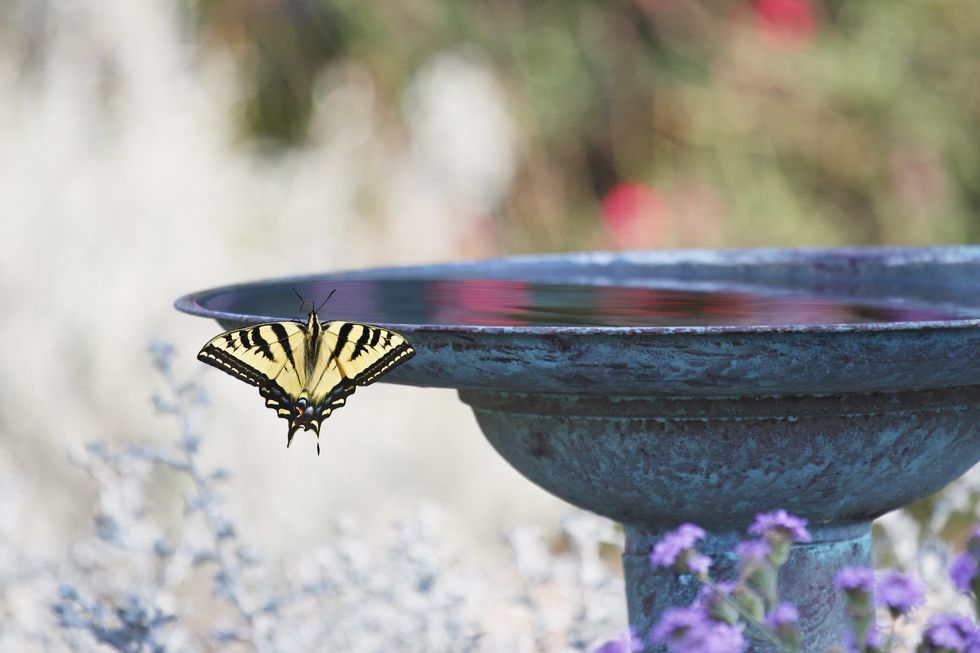
If you don’t have a birdbath, give pollinators a spot to rest and have a drink by placing a shallow dish (a plastic or terra-cotta pot saucer will work) filled with water near your garden area. Add stones to the dish to give visitors a way to exit if they fall in. Early spring is also a good time to dust off your hummingbird feeder and fill it with sugar water.
Resist the Urge to Rake
A pristinely manicured lawn might look nice to your neighbors, but it’s not attractive to pollinators. Fallen leaves provide cover for bees and other insects during the colder months into early spring. “If you want to rake up your yard, put those leaves in your bed or in the landscape that you want to create a habitat for pollinators. And allow those leaves to kind of decompose and create a home for them,” says Marzella.
Take a Month Off from Mowing

Just like raking leaves, mowing your yard can also keep pollinators away. Before your garden starts to bloom, you may notice patches of wildflowers like dandelions and violets sprouting up in the grass. These weeds are a good source of food in early spring, when most plants have not come back yet. The No Mow May movement encourages people to let their grass grow for a month to support native bees.
Be Mindful of Pesticides
“Watch what you’re spraying and where,” says Marzella. “People spray their yards with pesticides and herbicides, but that’s also going to kill the pollinators.” If you must use pesticides, choose the least toxic kind available and avoid areas with blooming flowers.
Give Them a Year-Round Home

Marzella says that the best way to support pollinators is to create a habitat where they can live all year. In the fall, when flowers have faded, resist pruning them. “If you’re wanting to encourage them to come and make a home and stay there, don’t cut back the dead flowers and the sticks and all that stuff,” she says. “Leave those in place through the winter to allow all the pollinators, the birds, all the little critters, and the microorganisms underneath to stay and make a home there.”
In the spring, when the weather warms up, pollinators will already be right in your garden, waiting to emerge. She adds, “It’s not that you’re attracting them back. You’re keeping them there year round.”


