4 min read
Experienced antiques shoppers know exactly what to prioritize when hunting for vintage prizes to add to their collections. They keep a close eye on details like patina, maker’s marks, and quality craftsmanship—and they also know when it’s best to walk away, even if a piece is calling their name. Ready to up your own antiquing game? Below, I—an experienced secondhand shopper—along with four seasoned antiques dealers, share seven things those with serious secondhand shopping experience look for when shopping for antiques.
1. Signs of Real vs. Manufactured Patina
There is indeed such a thing as real patina versus manufactured wear, notes Paige Kontrafouris, a content creator and secondhand dealer, and you’ll want to learn how to distinguish between the two. “True age shows up where hands have touched, drawers have opened, and sunlight hits,” she explains. “You’ll see subtle fading, oxidation around hardware, softened edges, and variation in tone.” By contrast, she notes, “Manufactured distressing often feels repetitive or randomly placed.”
Keeping your eyes peeled for signs of patina can be useful when examining vintage and antique art, as well. Kontrafouris advises turning paintings over to look for gallery labels, a framer’s stamp, and other markings that can offer clues about a piece’s age, while also examining the front of the canvas for cracking and variation in color. Reproductions, on the other hand, tend to look flat or overly uniform.
2. Signifiers of Quality Construction...
If you spot a piece by a well-known maker like Henredon, you can generally trust you’re looking at something well crafted. That said, a “no-name” piece can be just as much of a score, provided you know what to look for. Per Kontrafouris, dovetail joints, solid wood drawer bottoms, and hardware with natural weight and variation are all signs of high-quality construction. “And always look underneath,” she adds, “as you never know what markings are there that can help identify if a piece is something of quality or mass-manufactured.”
3.... and Quality Craftsmanship
If you, like Alexander Widener, are drawn to antique textiles such as quilts, you’ll want to develop a clear understanding of quality craftsmanship. Widener, a content creator and secondhand dealer, notes that the best quilts date from the 1800s to the early 1900s. “To make sure you’re getting the real deal, check for hand stitching,” he says. “Antique quilts will be entirely pieced and quilted by hand, with irregular stitches.”
Knowing how to identify the fabrics used is important, too. “Early quilts will have era-appropriate prints and dyes—the fabric can tell you a lot,” he says. Finally, keeping an eye out for a signature or date is another way to feel confident that you’re purchasing an authentic piece. “They are usually signed in the corner, either in brown ink or stitched into the quilt,” Widener shares. “If it’s signed (and a fair price), I always bring it home.”
4. Maker’s Marks
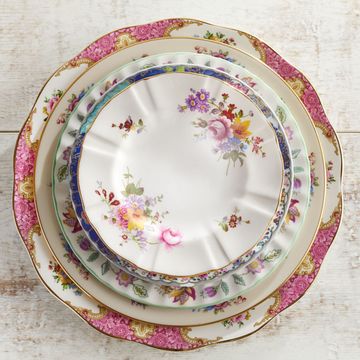
Maker’s marks and company logos can help confirm whether a piece is what you think it is—but you may have to hunt for them. “Good quality pieces are usually marked on the underside, either stamped into the clay or transferred on,” Widener notes. It’s also helpful to remember that marks evolve over time; Wedgwood, for example, changed its stamp throughout the years, which can actually help with dating.
Still, a name alone isn’t proof of authenticity. “Don’t look for a mark alone, verify a piece is authentic by scrutinizing quality and materials,” Widener says. In fact, many 18th-century items are unmarked altogether, according to Logan Taylor, founder of Logan Taylor Antiques, meaning you’ll need to rely on subtle surface imperfections and signs of age.
The key, experts agree, is to slow down. Sydney Hale, founder of Soul Fed Home, says she always looks for evidence of human touch. “Handmade pieces rarely strive for perfect uniformity, and subtle variations are often the clearest markers of an artisan’s hand.”
5. Repairs That Are Actually Realistic
While most secondhand pieces will show some signs of use—which only adds to their charm—I’ve learned over time to be wary of items that require repair, given the time and money involved. Collecting special finds to revamp on a rainy day may seem like a good idea while you’re shopping, but it’s important to be honest with yourself about whether you truly have the capacity to tackle those kinds of DIY projects. It may be in your best interest to step away from pieces that need a little TLC and instead put your money toward those already in great condition.
6. Similarly Priced Pieces Online
Thanks to reverse Google image search, it’s easy to immediately snap a photo of an item you’re considering in-store and compare its pricing to similar items listed for sale online. You’ll quickly discover whether the retailer you’re patronizing has priced an item well or ridiculously high. (Just note: You’ll want to pay closest attention to what similar pieces have actually sold for—not just what they’re listed for—as some platforms are notorious for inflated prices.) This tactic has certainly saved me money over the years and prevented me from shelling out for items that really aren’t worth all that much, but in other instances, it’s reassured me that I am, in fact, getting an amazing deal.
7. New Uses for Old Things
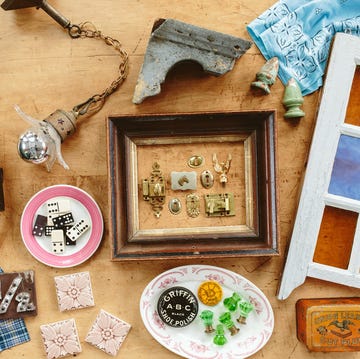
Given how much people’s daily lives have changed over the past century—and even the past half century—it’s important to be open-minded when evaluating antique items and to consider ways to use them that extend beyond their original purpose. In my own home, for example, I frequently repurpose ashtrays as chic candleholders and use empty cigar boxes to tuck away remote controls, and the like. If you love an item you spot while antiquing, don’t feel limited by its intended use; with a little creativity, you can give it a new (and possibly improved!) lease on life.